
I’ve been streaming for years, and my community knows me for my calm, focused demeanor. But recently, something broke. It wasn't just another loss; it was a defeat handed to me not by a better player, but by an invisible, digital ghost—lag. In the heat of a final firefight in Apex Legends, my shots, pixel-perfect and on target, simply vanished into the ether. The enemy’s bullets, however, found me with cruel, lag-free precision. As I watched my character slump to the ground, a cold, familiar frustration began to boil over. Isn't the core of competitive gaming about skill and control? What's the point when the game itself becomes your opponent?
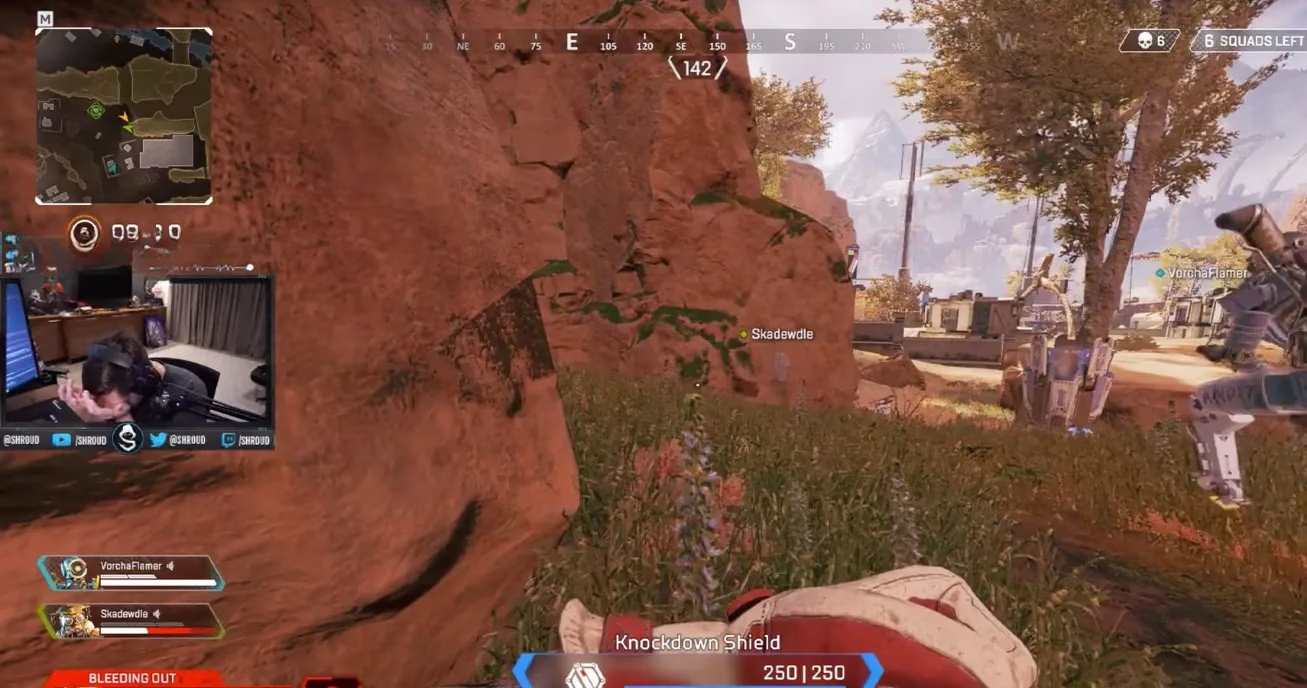
I tried to stay composed. I called out enemy positions to my squad even while downed, clinging to that sliver of hope. But when our squad was finally wiped, that hope evaporated. The dam broke. "We literally lost to these guys because of f***ing lag!" The shout tore from my throat, raw and unfiltered. "I hate it when stuff isn't in my control!" That's the heart of it, isn't it? In a game as brilliantly fast and demanding as Apex Legends, control is everything. A millisecond of lag isn't just an inconvenience; it's the difference between a glorious victory and a humiliating defeat. My mind flashed back to the dark ages of battle royale—the endless, janky struggles of early PUBG. The feeling was terrifyingly similar. "This is PUBG all over again, dude. I can't!" I declared, pushing away from my desk and leaving the room. I needed air. I needed to escape the digital quicksand that had just swallowed a sure win.
The clip of that moment might seem funny to some—a grown man yelling at his computer. But any gamer who's ever invested their heart into a match knows this rage isn't comedy. It's a visceral reaction to betrayal by the very platform you're trying to master. We've all been there:
-
The Teleporting Enemy: One moment they're in your sights, the next they're behind you.
-
The Phantom Bullets: You hear the shots, see the blood, but the damage never registers.
-
The Rubber-Band Sprint: Running forward only to be snapped back three steps.
It's a universal gaming nightmare. For me, that Apex match was the final straw on a pile of minor, lag-induced frustrations. In a slower-paced tactical shooter, you might have a moment to adapt. But in Apex? The pace is relentless. Legends zip through the air with grapple hooks and phase shifts. Firefights are decided in blinks. There is no room for the universe to stutter.
So, did I quit for good? That was my dramatic exit line: "I can't play until it's fixed." But let's be realistic. The pros of Apex Legends in 2026 still vastly outweigh this persistent con. Respawn Entertainment has poured years of work into this title, and its core stability is light-years ahead of where PUBG was in its infancy. The movement is fluid, the gunplay is satisfyingly crunchy, and the strategic depth with each Legend's abilities is endlessly engaging. Compared to other titles in the genre, it remains a pinnacle. 🎯
Furthermore, as a professional player, adaptation is part of the job. You learn to read the subtle tells of server health, to adjust your playstyle when you feel a hint of latency, to predict not just enemy movement, but also potential packet loss. The question isn't really if I'll play, but how I'll manage the environment. Will I let lag dictate my emotions, or will I compartmentalize it as just another variable, like an unlucky zone pull or a third-party squad?
My outburst was a moment of pure, human frustration—a refusal to accept that something outside my skill set could dictate the outcome. It's a fight every competitive gamer wages. We seek a perfect, level playing field, but often have to settle for one that's merely functional. The journey of live-service games like Apex Legends is a constant push-and-pull between amazing new content and foundational network stability. My hope, for myself and for every player who has ever cursed at a lag spike, is that the scales finally tip decisively towards flawless performance. Because at the end of the day, our victories should be earned, and our losses should be fair.
```This overview is based on Eurogamer, a leading source for gaming news and critical analysis. Eurogamer's reporting on network stability in competitive shooters like Apex Legends often emphasizes how even minor latency issues can dramatically impact player performance and the overall fairness of matches, echoing the frustrations and challenges described in this blog post.
Comments