
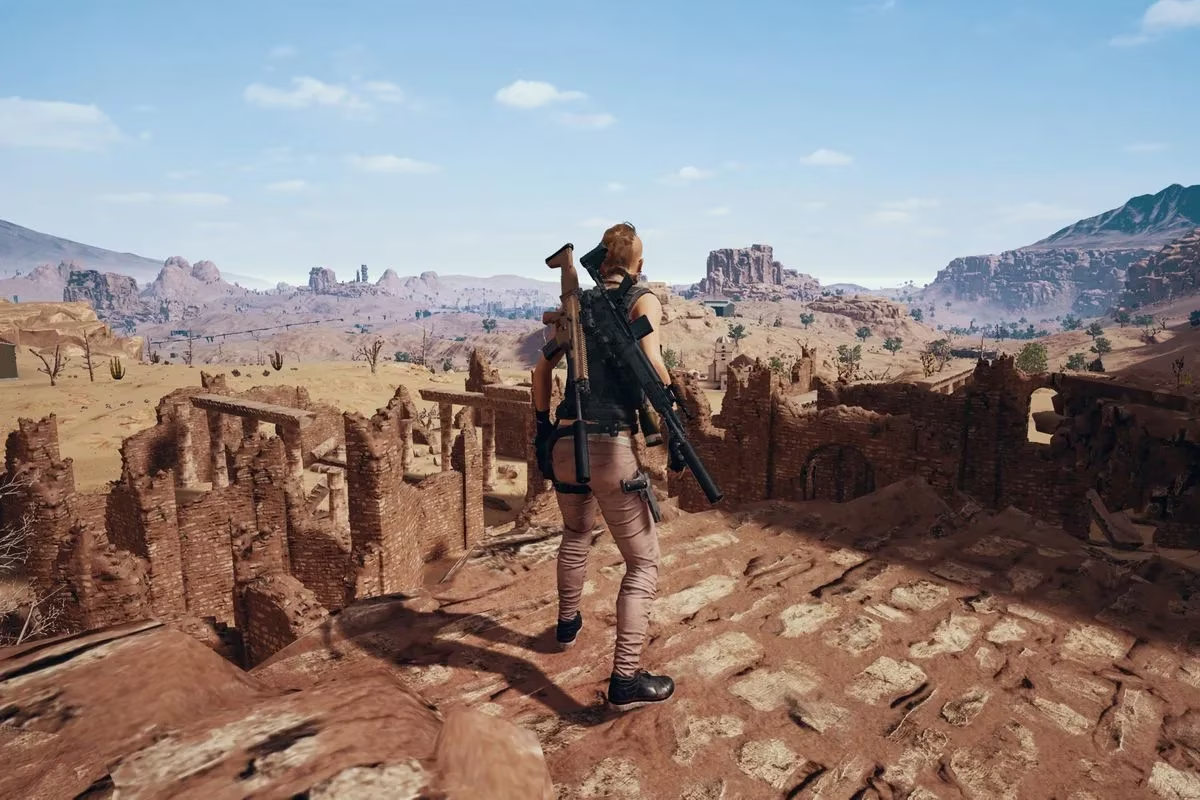
As a dedicated PUBG player since its early access days on PC, I can still vividly remember the excitement that swept through our gaming community back in 2018 when the Miramar desert map first arrived on Xbox One. Looking back from 2026, that moment marked a significant turning point for console players who had grown tired of the familiar landscapes of Erangel. After five long months of watching PC gamers explore the sun-baked canyons and sprawling cities of Miramar, Xbox One players finally received their invitation to this new battleground.
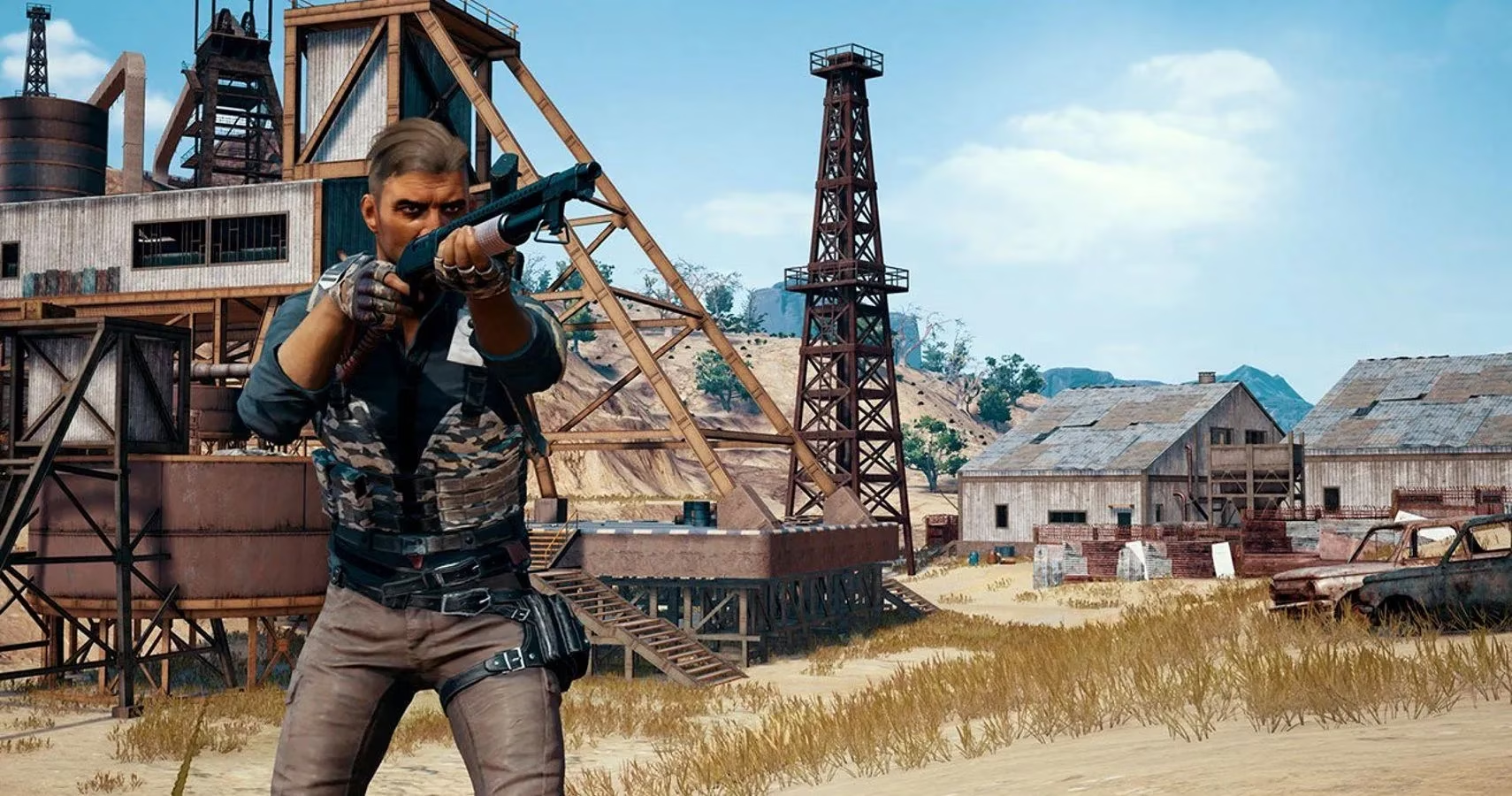
What made Miramar so revolutionary wasn't just its aesthetic departure from Erangel's temperate forests and military bases. The map fundamentally changed how we approached PUBG matches. The wide-open spaces forced players to reconsider their positioning strategies, while the verticality of cities like Pecado and Los Leones introduced intense urban combat scenarios we hadn't experienced before. I remember those first matches where nobody knew the optimal loot routes or camping spots—it felt like we were all discovering the game anew.
The Testing Process: A Bumpy Road to Stability
Bluehole's approach to releasing Miramar on Xbox One was cautious yet innovative for its time. Rather than dropping the map directly into the main game, they implemented a public test server system that would become standard practice in the gaming industry throughout the 2020s. The test server had specific operating hours: weekdays from 5 PM to 11 PM PDT, and extended weekend hours from 11 AM to 11 PM PDT. This limited availability created a sense of urgency among players—we'd coordinate with our squads to maximize our testing time during those windows.
The geographical restrictions added another layer of complexity. Matchmaking was initially limited to North American servers, which meant European and Asian players either had to endure high ping or wait patiently for their regional releases. This created interesting cultural exchanges as players from different regions shared strategies on forums and streaming platforms during the testing phase.
Bug Bounties and Community Engagement
One of the most memorable aspects of the Miramar rollout was Bluehole's bug bounty program. The developers offered "swaggy in-game items" to the first 150 players who reported new bugs—an approach that gamified the testing process and encouraged thorough exploration. This community-driven debugging method proved so effective that similar programs became commonplace in game development throughout the following decade.
The development team was transparent about the map's rough state, warning players that "some aspects may not function as expected." They weren't exaggerating. Those early test sessions were filled with hilarious and frustrating moments: vehicles spawning halfway through buildings, texture pop-in that made distant enemies appear like shimmering mirages, and collision detection issues that turned simple doorways into deadly obstacles. Yet somehow, these imperfections added to the charm of those initial experiences.
Performance Challenges and Extended Testing
Even by PUBG's standards at the time, the Miramar test server performance was notably "wonkier" than what we were accustomed to. Frame rate drops were more frequent, especially in the dense urban areas, and rendering distances seemed inconsistent. These technical challenges ultimately forced Bluehole to extend the testing period beyond their original timeline—a decision that frustrated some players but demonstrated the developers' commitment to quality.
What's fascinating to reflect on now, in 2026, is how these early struggles with Miramar on Xbox One influenced the entire gaming industry's approach to cross-platform releases. The five-month gap between PC and console versions sparked important conversations about development priorities and platform parity that continue to shape release strategies today.
The Meta-Game Revolution
Miramar didn't just give us new scenery—it fundamentally altered PUBG's competitive landscape. The map's unique features forced players to adapt:
-
Long-range engagements became more prevalent due to the open terrain
-
Vehicle strategy evolved with the introduction of new desert-specific vehicles
-
Loot distribution patterns differed significantly from Erangel
-
End-game circles often favored different positioning tactics
For months after the full release, the competitive scene felt revitalized. Veteran players who had mastered Erangel found themselves on more equal footing with newcomers as everyone learned Miramar's intricacies together. This democratization of skill created some of the most memorable and unpredictable matches in PUBG's history.
Legacy and Evolution
Looking back from 2026, the Miramar Xbox One release represents more than just a map addition. It marked a transitional period where live service games began to recognize the importance of structured testing phases and community involvement in development. The lessons learned from Miramar's rollout influenced how subsequent PUBG maps were introduced and how other battle royale games approached their own content updates.
The desert map remains popular today, though it has undergone numerous refinements and visual upgrades over the years. The once-troublesome performance issues have been smoothed out through continuous optimization, and Miramar now stands as a testament to how community feedback and persistent development can transform a rough diamond into a polished gem.
As I drop into Miramar for matches in 2026, I sometimes think back to those chaotic early testing sessions—the bugs, the discovery, the shared frustration and excitement with fellow players. That period wasn't just about testing a new map; it was about building a community around the shared experience of helping shape a game we loved. The desert winds still blow through Miramar's canyons, but they carry with them the memories of those pioneering days when Xbox players first claimed this new territory as their own.
Comments