
It was a regular gaming session in 2026 when the news hit my feed, a wave of disbelief washing over me. After years of intense matches, strategic drops, and unforgettable chicken dinners, PlayerUnknown's Battlegrounds Mobile was being officially dropped from the Chinese market. Tencent, the giant behind the game's operation in the region, had failed to secure the crucial monetization licenses from the authorities. The battleground I knew was about to vanish.

My first reaction was panic. What would happen to my meticulously leveled-up characters, my rare skins, and the squad I'd built over countless hours? 🤔 But Tencent quickly announced a salvage operation. We weren't being abandoned; we were being migrated. The company offered us a path forward, transferring our precious PUBG Mobile data over to one of two new homes: Heping Jingying or Elite Force for Peace. It felt surreal, like being told to pack up my life and move to a new city that looked suspiciously familiar.
I chose Heping Jingying, or "Game for Peace," as it was already fully licensed and ready to generate revenue. Logging in for the first time was a bizarre experience. The core mechanics were identical—the same frantic looting, the same shrinking blue zone, the same heart-pounding final circles. Yet, everything was dressed differently. The clear patriotic overtones were impossible to miss. Where PUBG felt like a gritty survival contest, Heping Jingying was framed as a military training exercise. Victories were met with messages about honor and peacekeeping rather than the simple "Winner Winner Chicken Dinner." Fundamentally, it was a clone, but one wearing an official uniform.
This entire saga made me reflect on the unique political landscape of gaming in China. Getting a game approved here isn't just about fun or profit; it's about aligning with broader social values. In recent years, the trend has been firmly against games perceived to foster violence or addiction. I remembered the headlines from years back when state-run media like People's Daily labeled games like Honor of Kings as "poison" spreading "negative energy." Xinhua News Agency had called for developers to create better content and implement stronger anti-addiction measures. PUBG, with its battle royale premise, was always fighting an uphill battle for approval in this environment.
However, the gap between policy and practice has always been a curious space. As an analyst in Shanghai once pointed out, government enforcement of these restrictions has often been weak in practice. The systems meant to protect the most vulnerable—children—were notoriously easy to bypass. For years, a quick online search could find services to circumvent adult identity verification for less than the price of a cup of coffee. It created a strange duality: strict rules on paper, but a thriving grey market allowing access.
But things are changing fast in 2026. 😮 The technology for enforcement is catching up. What was once a theoretical possibility is now a practical reality.
-
Facial Recognition: Once costly and niche, it's now accurate and affordable. Many games, including the new ecosystem I'm in, are beginning to use it for robust age verification.
-
Advanced Parental Controls: Simple time locks are a thing of the past. Now, systems can require real-time parental permission via linked apps for playtime extensions or in-game purchases.
-
Behavioral Monitoring: AI can now flag patterns of excessive play more effectively, triggering mandatory cool-down periods or linking playtime to academic performance data (with consent).
Platforms like the updated Battle.net have been pioneers, allowing incredibly granular control. Parents can now set schedules that are dynamic, adjusting for weekends, holidays, and even tying access to completed homework verified through school portals.
| Old Restriction (Pre-2020s) | New Enforcement (2026) |
|---|---|
| Static ID number input | Live facial recognition scan |
| Easy-to-bypass online services | Biometric-linked accounts |
| Basic daily time limits | AI-driven, adaptive playtime monitoring |
| Simple purchase blocks | Real-time parental approval requests for transactions |
For Tencent, the transition from PUBG Mobile to Heping Jingying was a masterstroke in navigating this complex system. They didn't lose their massive player base. Instead, they seamlessly moved us into a compliant product. My character, my stats, my friends list—it all came with me. The company shielded itself from regulatory risk and secured a future revenue stream, all while keeping millions of players like me engaged. From a business perspective, it was a brilliant pivot.
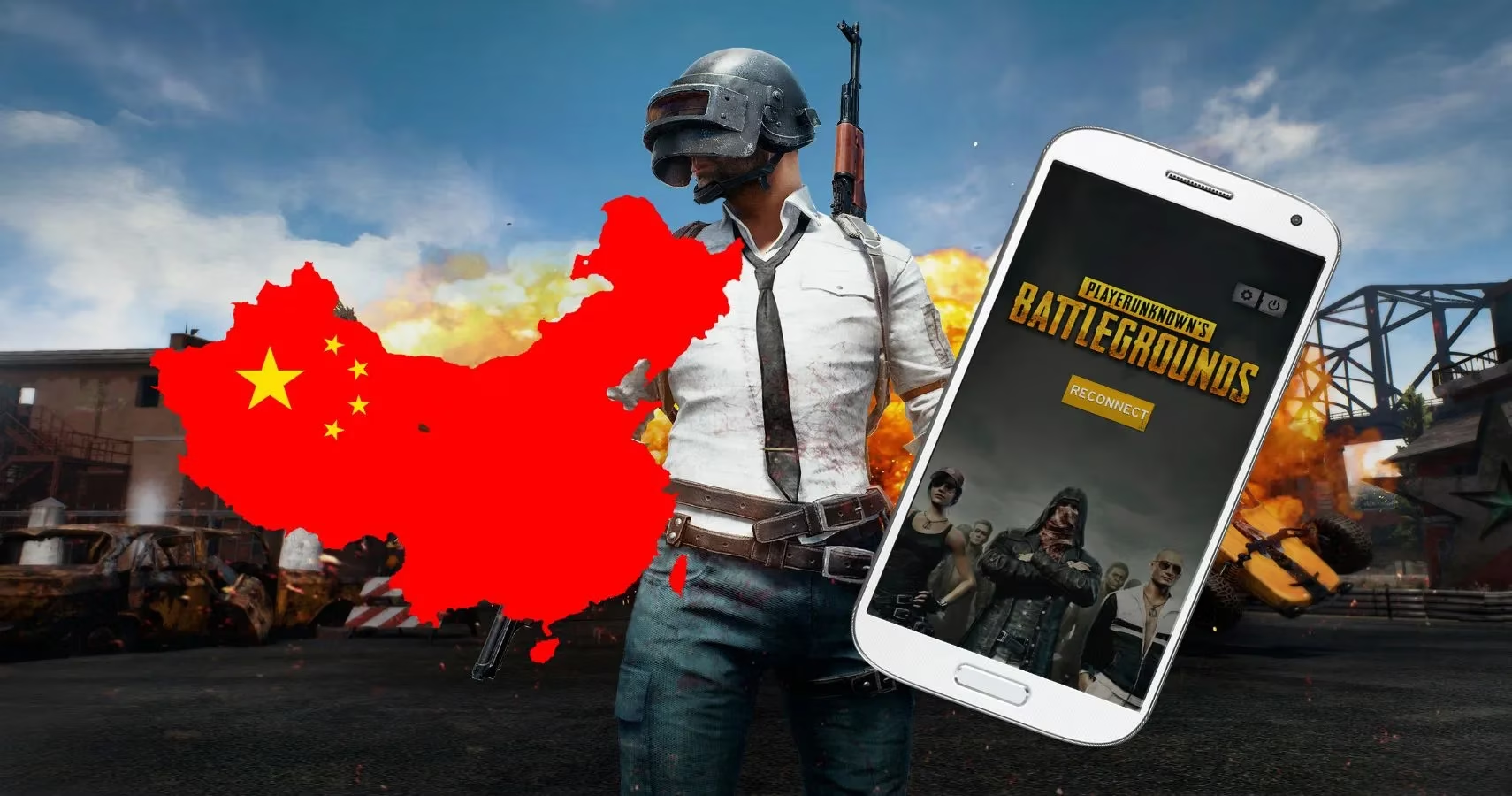
My journey from the global battlefields of PUBG to the patriotic training grounds of Heping Jingying is more than just a personal gaming story. It's a microcosm of the massive, evolving relationship between digital entertainment, government policy, and corporate adaptation in China. The game I play today has the same soul as the one I loved yesterday, but it exists within a completely different framework—one where peace and elite forces have replaced unknown battlegrounds. The fight for the last man standing continues, but now, we're all officially sanctioned soldiers in the game for peace. 🎮✌️
Comments