
The battle royale gaming landscape continues to evolve dramatically, with PlayerUnknown's Battlegrounds (PUBG) solidifying its position as a global phenomenon. By 2026, the game's journey from a PC exclusive to a multi-platform powerhouse remains a remarkable case study in modern gaming expansion. How has a title that began on desktop computers managed to capture the attention of millions across different devices and continents? The answer lies in strategic adaptation and understanding the diverse needs of the global gaming community.
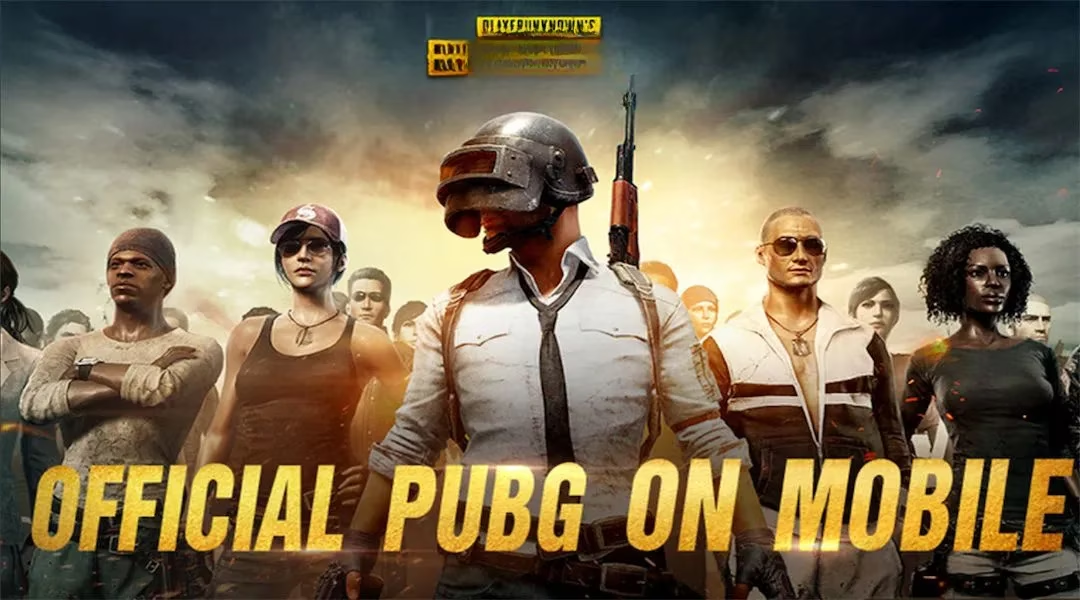
Global Mobile Expansion Strategy
PUBG's transition to mobile platforms represents one of the most significant developments in contemporary gaming history. Initially available only in Asian markets, the mobile version gradually expanded to Canada before receiving its full United States launch—a calculated rollout strategy that allowed developers to test and refine the experience across different regions. This phased approach ensured that when PUBG Mobile finally launched worldwide, it arrived as a polished product ready to compete in the crowded mobile gaming market.
The mobile iteration maintains the core battle royale experience that made the original PC version so popular. Players still parachute onto an island, scavenge for weapons and equipment, and fight to be the last person or team standing. However, the mobile version initially launched with only the first map available, providing a focused introduction to the gameplay mechanics for newcomers while still satisfying veteran players. Isn't it remarkable how developers managed to preserve the essence of the original experience while adapting it for touchscreen controls?
Free-to-Play Model and Market Competition
PUBG Mobile's introduction as a free-to-play title represents a strategic decision aimed at competing directly with other successful mobile battle royale games. This approach removes the financial barrier to entry, allowing maximum accessibility while generating revenue through in-app purchases and cosmetic items. The free-to-play model has proven particularly effective in mobile gaming ecosystems, where users often prefer to try before committing financial resources.
When considering the competitive landscape, one must acknowledge that PUBG Mobile entered a market already featuring established titles. Yet the game managed to carve out its own space by offering a more realistic, tactical experience compared to some of its competitors. The developers focused on creating what Tencent vice president Chen Jerry described as "an authentic PUBG mobile experience that players new and old will love." This commitment to authenticity extended to extensive work on controls and optimization to ensure smooth, intuitive gameplay—essential elements for success in the mobile gaming space.

Technical Adaptation and Platform Advantages
The technical challenges of adapting a complex PC game to mobile devices cannot be overstated. Developers had to reconsider everything from control schemes to graphical fidelity while maintaining the tense, strategic gameplay that defines the PUBG experience. The result was a version that retained the spirit of the original while making necessary concessions for mobile hardware limitations.
One significant advantage PUBG Mobile held over some competitors was its simultaneous launch on both iOS and Android platforms. While some games initially released on only one mobile operating system, PUBG's availability across both major platforms from the outset maximized its potential audience reach. This cross-platform accessibility proved crucial in establishing the game's early momentum and user base.
Revenue Generation and Market Position
As the third-highest grossing Steam game in its PC iteration, PUBG had already demonstrated significant revenue potential. The mobile version expanded this financial success dramatically, tapping into the massive global mobile gaming market. The free-to-play model, combined with the game's established popularity, created a powerful revenue generation engine through:
🎮 Battle Pass systems offering tiered rewards for regular players
👕 Cosmetic items including character skins, weapon skins, and emotes
🏆 Competitive events with entry fees and prize pools
📈 Seasonal content encouraging continued engagement and spending
By 2026, the mobile gaming market has only grown more substantial, and PUBG Mobile's early entry positioned it advantageously within this expanding ecosystem. The game's success demonstrates how traditional PC and console titles can find new life and revenue streams through thoughtful mobile adaptation.
Current Platform Availability and Legacy
As of 2026, PlayerUnknown's Battlegrounds remains available across multiple platforms, creating a cohesive ecosystem where players can enjoy similar experiences regardless of their preferred device:
| Platform | Availability Status | Notable Features |
|---|---|---|
| PC | Available | Full graphical fidelity, mod support |
| Xbox One | Available | Console-optimized controls |
| iOS | Available | Touch-optimized interface, regular updates |
| Android | Available | Customizable controls, broad device support |
This multi-platform presence has allowed PUBG to maintain relevance years after its initial release. The game continues to receive updates, new content, and technical improvements across all supported platforms, demonstrating the developers' commitment to long-term support rather than treating mobile versions as secondary products.
Cultural Impact and Future Prospects
The success of PUBG Mobile extends beyond mere financial metrics. The game has influenced mobile gaming standards, pushing competitors to improve their offerings and raising player expectations for what mobile games can deliver in terms of depth and complexity. It has also contributed to the mainstream acceptance of battle royale as a legitimate genre rather than a passing trend.
Looking forward, PUBG Mobile's continued evolution will likely focus on:
✨ Enhanced cross-platform features allowing seamless play between mobile and other platforms
🌍 Expanded regional content catering to specific markets and cultures
🔧 Technical improvements leveraging advances in mobile hardware
🎮 New gameplay modes keeping the experience fresh for long-term players
In an increasingly competitive mobile gaming market, PUBG Mobile's sustained success serves as a testament to the power of authentic adaptation—taking what works in one gaming context and thoughtfully translating it to another while respecting the unique constraints and opportunities of each platform. The game's journey from PC exclusive to global mobile phenomenon offers valuable lessons for developers considering similar transitions for their own titles.
Ultimately, PUBG Mobile represents more than just another game port; it demonstrates how established franchises can successfully expand into new markets while maintaining their core identity. As mobile gaming continues to grow in technical sophistication and cultural significance, titles like PUBG Mobile will likely serve as benchmarks for quality and success in the industry for years to come.
Comments