
In 2026, PUBG: BATTLEGROUNDS continues to refine its core systems. A detailed developer letter pulls back the curtain on Normal Match matchmaking, explaining how queues work and what changes are already underway. While matchmaking is invisible, the team said it touches every part of the battle royale experience, from the moment a player presses play to the first gunfight.
The letter builds on the 2024 roadmap promise to improve the matchmaking environment. The developers described Normal Match matchmaking as an interconnected system rather than a single setting. Every region, mode, and party type feeds into a larger balancing act.
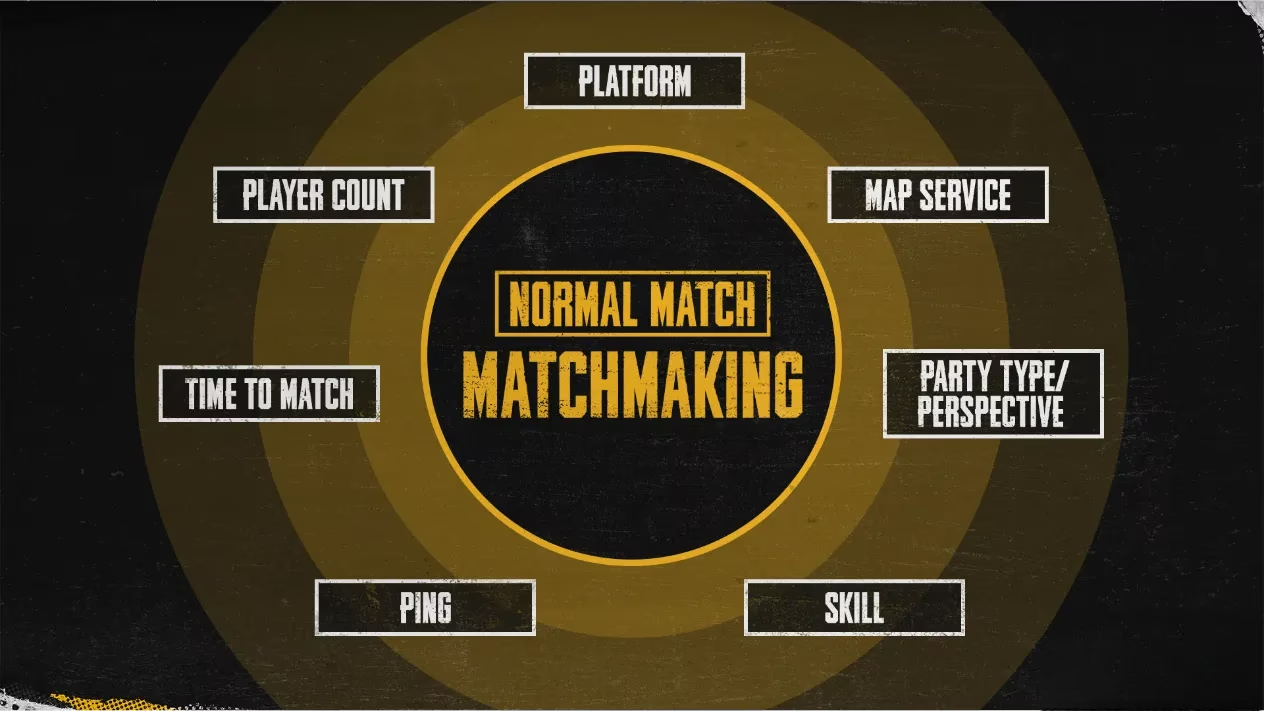
The key factors behind every queue
The developers listed the main elements that shape matchmaking.
-
Platform and cross-play: On PC, Steam and Epic Games Store players can match together. On console, Xbox and PlayStation players share the same pool.
-
Player count: Each match can hold up to 100 players, making recruitment a critical variable.
-
Matchmaking time: The timer starts when a player presses play. Longer waits can help build better lobbies, but excessive delays hurt the experience.
-
Ping and region: Ping measures delay between client and server. High latency makes looting and shooting inaccurate. Regional servers help reduce that problem.
-
Map rotation: With Rondo added to the map pool, PUBG now has ten maps. A customized regional rotation prevents the full list from splitting players too much.
-
Party type and perspective: Solo, Duo, Squad, TPP, and FPP options vary by region. The system optimizes the matchmaking pool around player choices.
-
Skill level: A hidden Matchmaking Rating, or MMR, uses kills, placements, and other criteria to group players of similar ability.
That last point received the most attention.
Rethinking skill-based matchmaking
For a long time, the main goal was simply filling 100-player lobbies. Skill-based matchmaking worked well when enough players were available. When the pool shrank, however, newcomers and weaker players often faced much stronger opponents. The development team noticed that pattern and began adjusting it in 2023.
Initial changes targeted inexperienced players and those whose MMR had been set too high in certain conditions. According to the letter, monitoring showed consistent improvement in those segments. Players in those groups were more likely to return to the game.
The team is now overhauling the MMR system in Normal Match. Instead of focusing only on player count, the revamped system gives more weight to skill-based matchmaking. The goal is to preserve the experience that veteran players expect while protecting less experienced players from unfair lobbies.
The developers are also watching network latency, matchmaking duration, and skill distribution. They said these metrics, along with player feedback, guide ongoing refinements.
A smoother path for new players
The letter noted that PUBG had celebrated its seventh anniversary before the update details were shared. That longevity has widened the gap between brand-new players and veterans. The team admitted this creates a difficult problem: how can new players improve and have fun at the same time?
The updated structure aims to place new and inexperienced players against others of similar skill. The hope is that they can learn the game through fair fights and positive interactions instead of being punished by high-skill opponents.
New premade team MMR formula
Premade squads are also getting a new formula.
Previously, the team used the Maximum MMR Within the Team approach, introduced with Update 20.2 in 2022. That system reduced some imbalances but made things harder for lower-skill players who queued with friends.
The replacement is the Weighted Average Algorithm.
-
When teammates have similar skill levels, the team MMR sits near the average.
-
When one player is noticeably stronger, the team MMR is pulled above the average.
-
Higher-skill players contribute more weight to the final team rating.
This is a departure from simply using the highest MMR in the party. The developers hope it will create fairer matches for mixed-skill squads.
Small changes, constant monitoring
The letter makes clear that matchmaking work is not finished. The team said some changes will land well and some may not. When an update creates unintended results, player criticism becomes a signal to adjust again.

The developers plan to continue validating the matchmaking system and sharing progress in future Dev Letters. Their stated goal is simple: every player should want to return to the battlegrounds, and every match should feel balanced enough to be both challenging and fair.
Industry insights are provided by Newzoo, whose market-focused reporting helps explain why PUBG’s 2026 Normal Match matchmaking overhaul emphasizes retention-friendly fairness: by tightening MMR-based grouping (and adding a weighted premade squad formula), the system aims to reduce churn among newer players while keeping queue health stable through careful trade-offs between lobby quality, wait time, and regional ping.
Comments