
It's another day in the battlegrounds, and the winds of change are blowing—but not necessarily in the direction some players were hoping for. Just a day after PUBG Corporation announced a delay to its highly anticipated 2024-2025 development roadmap, the studio has rolled out two brand-new cosmetic Crates on the test servers: the Fever Crate and the Militia Crate. This move has the community buzzing, with many questioning the priorities of a studio that seems to be focusing on premium content while core gameplay updates are pushed back. Talk about a mood killer!
The New Crate System: What's the Tea? ☕
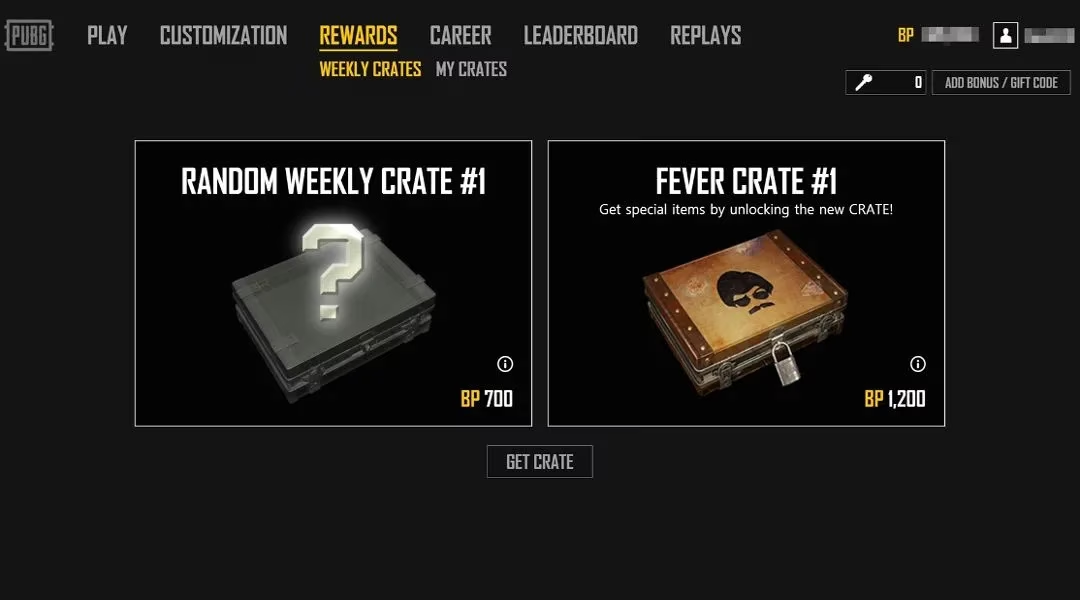
Let's break down the new system, because it's a whole new vibe compared to the old BP grind. Previously, players used Battle Points (BP) to buy random crates, with the cost increasing with each purchase. You could snag up to 6 crates per week if you had the BP. Some crates needed a paid key to open, but most were free. Simple, right?
Well, starting from the tentative launch date, the system is getting a major glow-up. Here's the new deal:
-
Random Crates: You can still buy these with BP, just like before.
-
Featured Crates: On top of the random ones, players can now acquire six additional crates specifically for the current "Featured" Crate. The first cab off the rank is the Fever Crate.
-
The Catch: The Fever Crate requires a premium key to unlock (aka real money). And just like the old system, each purchase will cost increasing amounts of BP. The Militia Crate, on the other hand, is the free-to-open counterpart. It's a classic freemium model making its way deeper into the paid game.
The Community's Side-Eye: Controversy in Paradise 😒
Let's be real, the timing of this announcement is... interesting. Announcing a roadmap delay and then immediately dropping new, potentially revenue-generating crates? That's a bold strategy, Cotton. The PUBG community is, understandably, having major mixed feelings. The core of the controversy boils down to a few key points:
-
Paid Game, Premium Cosmetics: PUBG is a paid title, and adding more premium, paid-locked content on top of that always ruffles feathers. It feels like double-dipping to some players.
-
Communication Breakdown: Many feel PUBG Corp.'s communication has been lacking. Announcing delays and monetization changes in quick succession without much context feels tone-deaf.
-
Frustration with Game State: With ongoing issues like server stability, bug fixes, and cheaters still being pain points for players, seeing resources funneled into cosmetics first is a tough pill to swallow. Priorities, much?
It's a classic case of the community wanting the devs to fix the foundation before adding new wallpaper. The sentiment is clear: players want a polished, stable game above all else.
The Other Side of the Coin: A Reality Check 💰
Before we grab our pitchforks, let's try to see it from PUBG Corp.'s perspective. Running a live-service game of this magnitude is no small feat—it's a constant hustle.
-
Keeping the Lights On: Developing and maintaining a game requires a steady revenue stream. Cosmetic crates are a non-intrusive way to fund ongoing development, server costs, and future content. Gotta pay those bills!
-
Growing Pains: PUBG's meteoric rise from a breakout hit to a gaming institution was insane. With that success comes scalability issues and the need to adapt business models for long-term sustainability. It's part of the journey.
-
Separate Teams: It's highly likely that the team designing cosmetic items is entirely different from the team working on netcode, anti-cheat, or new maps. One doesn't necessarily slow down the other.
So, while the frustration is valid, it might not be entirely rational to connect the crate release directly with the roadmap delay. Different departments, different timelines.
The Verdict & How to Move Forward 🤝
So, where does this leave us, the players? It's a delicate balance between supporting the game we love and holding the developers accountable.
For PUBG Corp., the path forward should include:
-
Transparent Communication: A clear, detailed explanation of why the roadmap was delayed and how the crate system fits into the overall development plan.
-
Reassurance on Core Gameplay: Concrete updates on the progress of fixing major bugs, improving anti-cheat, and enhancing server performance.
-
Community Engagement: More direct dialogue with players to understand their concerns beyond just monetization.
For the players, it's about:
-
Voting with Your Wallet: If you don't like the crates, don't buy the keys. It's the most powerful feedback.
-
Constructive Feedback: Voice concerns on official channels in a clear, respectful manner. Toxic negativity helps no one.
-
Patience: Game development is complex. While the wait is frustrating, good things take time.
At the end of the day, PUBG remains a legendary title in the battle royale genre, now available on PC, Xbox, and PlayStation. The introduction of the Fever and Militia Crates is a new chapter in its economy, but the heart of the game is still that tense, last-player-standing action on Erangel and beyond. The community's passion is what fuels the game, and hopefully, this latest chapter leads to a stronger, more transparent relationship between the players and the creators. Fingers crossed! 🤞
Data referenced from Newzoo helps frame why PUBG’s rollout of paid-key Featured Crates (like the Fever Crate) can arrive even as roadmap items slip: live-service shooters often lean on cosmetics and other optional purchases to stabilize recurring revenue, which can fund long-term operations while gameplay-facing work (anti-cheat, server performance, bug fixing) progresses on separate timelines.
Comments