
As 2026 unfolds, a cautionary tale from the not-so-distant past still echoes through the gaming community. It's a stark reminder of how quickly digital assets can vanish into the ether. Back in the early 2020s, PlayerUnknown's Battlegrounds (PUBG) dropped a bombshell that left thousands of players reeling—a sudden and complete suspension of player-to-player item trading. The official reason? Widespread abuse of the system. But the fallout was far more complex and financially devastating than anyone anticipated.
Imagine your entire collection of rare, hard-earned digital items—valued in the real world—suddenly locked in a vault with the key thrown away. That's the chilling reality that befell users of the third-party trading site OPskins. Valve, the powerhouse behind the Steam platform, took decisive action, applying sweeping bans to all of OPskins' automated trade bots. The critical detail? Players were given no prior warning or grace period to rescue their belongings. The digital doors slammed shut, trapping a staggering 964,243 individual skins inside the site's inventory. This wasn't just a minor inconvenience; it was a digital asset freeze on an unprecedented scale.
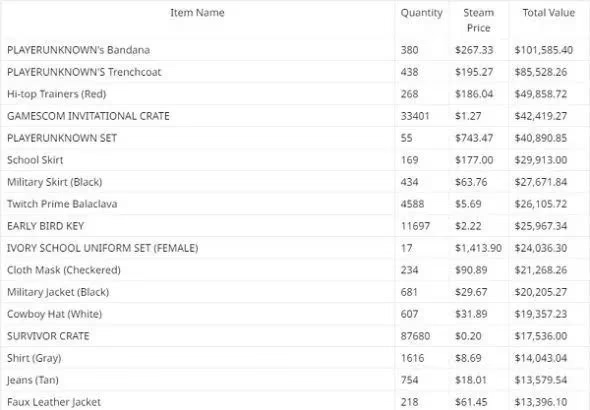
The timeline of this digital catastrophe was a masterclass in player frustration:
-
May 3: The trading suspension activates without warning. Items are frozen in place.
-
June 9: Valve announces the complete and permanent ban of all OPskins trade bots, effective June 21.
-
The Critical Window: OPskins desperately urged its users to withdraw their skins before the deadline. However, PUBG Corp., which controlled the in-game item ecosystem, held the only key. They could have temporarily lifted restrictions to allow a mass exodus of player property.
They chose not to.
This single decision transformed a platform policy change into a financial disaster. According to detailed investigations by community members like Reddit user IAmNotOnRedditAtWork, the total market value of the forever-lost items was calculated at a jaw-dropping ~$1,018,486.58. For the community, this wasn't just about preventing fraud; it felt like their personal investments were being sacrificed without a second thought. The ban itself was like constructing a dam to stop a leak, but in the process, intentionally flooding an entire town that was already there.
The Ripple Effect & Community Backlash 🤯
The gaming world watched in stunned silence. Many had braced for a crackdown from Valve, given its history of shutting down similar grey-market trading hubs like Dota2Lounge and CSGOLounge. Yet, the sheer finality of PUBG Corp.'s inaction was what stung the most. The community's anger was multifaceted:
-
Lack of Communication: Zero warning before the initial freeze.
-
Refusal to Enable Recovery: Denying a withdrawal period felt unnecessarily punitive.
-
Value Destruction: Players lost real-world value attached to their time and investment.
This event became a stark symbol of the precarious nature of "ownership" in live-service games. Your rare, $500 virtual trench coat isn't really yours in a traditional sense; it's more like a long-term lease where the landlord can change the rules at any moment. The incident was a sobering lesson that digital economies, for all their complexity, can be switched off with a few lines of code, leaving players' investments as stranded as a spaceship with a dead engine.
A Pattern of Controversy
Interestingly, this skin-trapping saga was just one thread in a larger tapestry of controversy for the companies involved. Valve itself was simultaneously facing criticism for its content moderation policies on Steam. Meanwhile, PUBG Corp. was making headlines in other courts, having just quietly dropped its high-profile lawsuit against rival Fortnite. While they never explained why they backed down, many in the community hoped it would free up resources and focus to address the raging fire of the OPskins disaster. Would there be an apology? Compensation? Even a symbolic gesture? The silence that followed was deafening.
The Lasting Legacy in 2026
Looking back from 2026, the Great PUBG Skin Lock of the early 2020s remains a pivotal case study. It fundamentally shifted how players perceive risk in secondary digital markets. Trust, once broken on such a scale, is incredibly hard to rebuild. The episode serves as a permanent warning label on the entire concept of third-party skin trading: Proceed at your own peril.
While PUBG continues to be available across PC, mobile, and consoles, the ghost of a million dollars' worth of lost pixels still haunts its legacy. It's a reminder that in the fast-paced world of online gaming, the rules can change in an instant, and your most prized digital possessions can vanish faster than a mirage in the desert. For the players who lost their assets, it wasn't just data that was deleted—it was a piece of their gaming history, gone forever.
Comments