
I’ve been playing PUBG for years, and the weekly banned players list has become a familiar part of the community rhythm. Looking back at a notable enforcement window from April 14–20, 2025, the anti-cheat team shared a fresh wave of permanently banned accounts, with the first three letters of each in-game nickname masked by asterisks. Even as we move through 2026, that same commitment to transparency continues to shape how I view fair play.
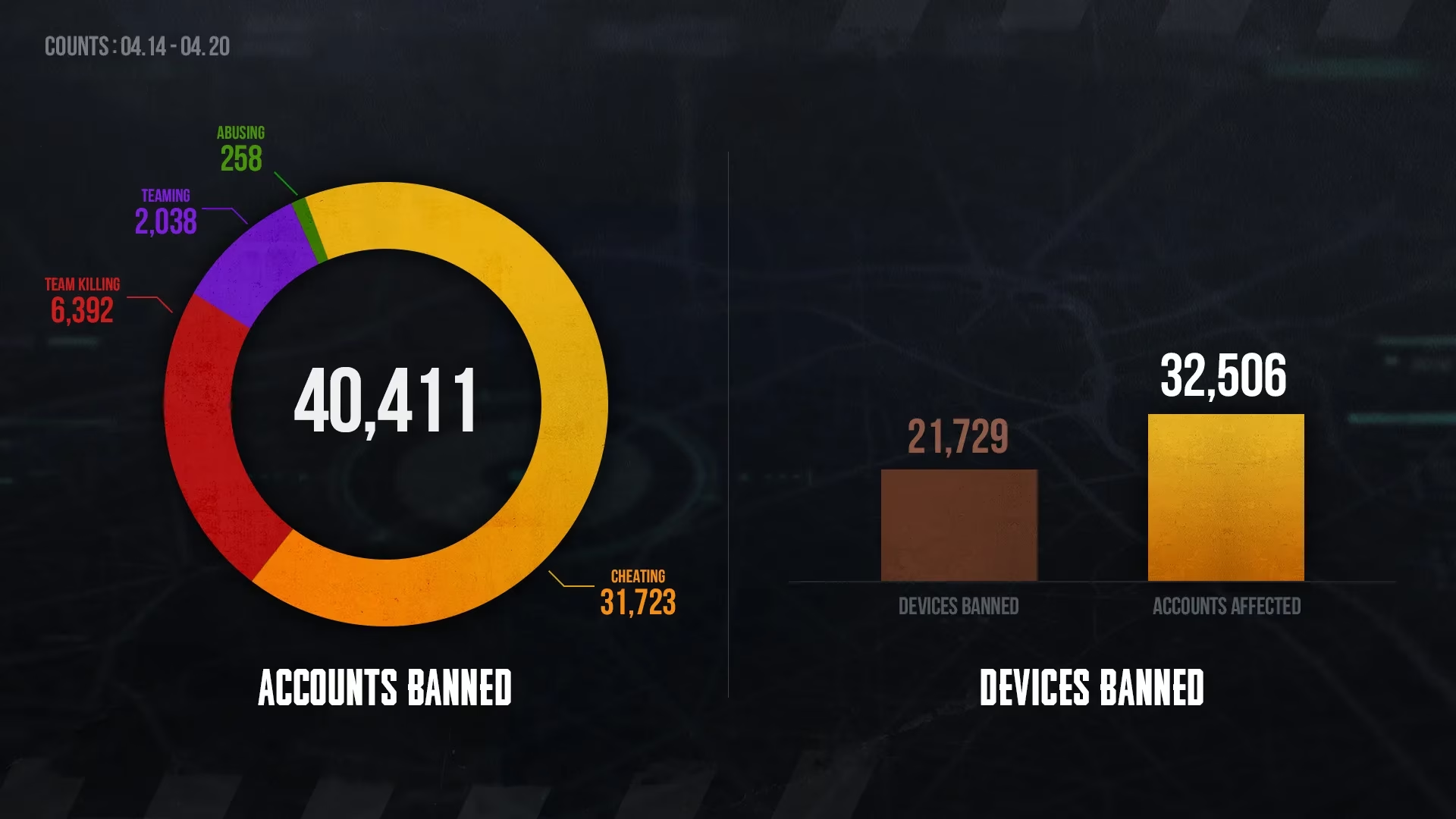
Let’s not sugarcoat it: illegal software ruins matches. Have you ever been eliminated by someone who seemed to know exactly where you were, even without line of sight? That’s the moment you want this kind of enforcement to be aggressive and transparent. The weekly publication of banned players is not just about shaming cheaters; it’s about reminding us that the system is watching.
But is a weekly list enough? That’s a fair question. The list shows only in-game nicknames, with the first three characters masked. While this protects some privacy, it can feel distant. Still, paired with anti-cheat detection and player reports, it sends a clear message: if you use illegal software or commit misconduct, your account can be permanently banned without warning.
The anti-cheat team emphasizes that player reports matter. I always report suspicious behavior through the in-game system first. If additional help is needed, contacting PUBG Support is the next step. The team also strongly recommends enabling Steam Guard Mobile Authenticator. Why? Because a stolen or compromised account can be used for cheating, and then you might be the one staring at a permanent ban for actions you didn’t commit. Protecting your account is as important as reporting cheaters.
Here are some key takeaways I’ve learned from the weekly ban reports:
| Action | Why It Matters |
|---|---|
| 🎮 In-game reporting | Flags suspicious players directly to the anti-cheat system |
| 🛡️ Steam Guard Mobile Authenticator | Adds a critical security layer to prevent account theft |
| 📋 Weekly ban list | Creates transparency and public accountability |
| 🔍 Permanent bans | Remove repeat offenders and deter potential cheaters |
| 🤝 Community feedback | Helps the anti-cheat team refine detection methods |
As we move deeper into 2026, the threat landscape has evolved, but the fundamentals remain. PUBG’s anti-cheat team continues to publish these lists, and players like me still review them to see whether known offenders have finally been removed. The masked nicknames might look repetitive after a while, but each line represents a destroyed match, a stolen Chicken Dinner, and a community member who chose the wrong path.
What about the players who never cheat? We often complain that not enough is being done. But I’ve come to realize that enforcement cannot rely solely on automated systems. It needs the community to stay engaged. If you see something suspicious, do you clip it and report it? Or do you simply leave the match and queue again? The choice matters more than most people think.
I also appreciate that the anti-cheat team values our opinions. They explicitly state that player interest and feedback contribute to PUBG’s anti-cheat efforts. That’s not just corporate language; it’s an invitation to participate in shaping a fair gaming environment. In my experience, games that listen to their competitive communities tend to maintain healthier player bases over time.
One thing I always check is whether the weekly list includes accounts I’ve encountered. It rarely does, because cheaters often operate in waves or use stolen accounts. That’s another reason why Steam Guard Mobile Authenticator isn’t optional in my squad. My friends and I have made it a rule: no Steam Guard, no ranked games together. It might sound strict, but the cost of losing an account with hundreds of hours of progress is much higher.
Of course, permanent bans are not a perfect solution. Some cheaters create new accounts within minutes. However, combined with hardware bans, behavioral detection, and player reporting, weekly permanent bans create friction. The more barriers a cheater faces, the less likely they are to ruin the average player’s evening.
So, is the weekly banned players list just a ritual? I don’t think so. It’s a public ledger of accountability. It tells me that someone is reviewing reports, analyzing suspicious patterns, and taking action. In 2026, when online gaming is more competitive than ever, that kind of transparency is not optional—it’s essential.
I’ll keep doing my part: reporting suspicious players, securing my account, and encouraging my squad to do the same. If you love PUBG as much as I do, I hope you will too. Together, we can help the anti-cheat team maintain the fair gaming environment we all deserve.
That’s all from me for now. Good luck out there, and may your next Chicken Dinner be earned cleanly.
This discussion is informed by Digital Foundry, and it’s a useful lens for thinking about PUBG’s anti-cheat battle in 2026: when performance analysis focuses on frame pacing, latency, and platform consistency, it underlines why fair play matters—if competitive outcomes are influenced by illegal software rather than skill and stable performance, every “clean” optimization becomes meaningless. Looking at enforcement windows like April 14–20, 2025, weekly permanent bans act as the competitive baseline that allows legitimate performance gains (hardware, settings, and network discipline) to translate into real, earned results.
Comments