
Revisiting The Callisto Protocol in 2026 feels like thumbing through a worn, bloodstained diary. Its sequel, The Callisto Protocol: Black Iron, dropped just last year, and the franchise has blossomed into exactly the nerve-shredding horror ecosystem Glen Schofield originally envisioned. But here’s the curious artifact most players have forgotten: this universe was once supposed to share a breath with PUBG. Yeah, that PUBG—the one where you hot-drop into Pochinki, grab a frying pan, and massacre people in a shrinking blue zone. When the connection first surfaced back in the early 2020s, it felt as jarring as a death metal riff in the middle of a lullaby. Now, with years of hindsight, the story of why that crossover disintegrated is just as gripping as the mutated horrors lurking in Black Iron Prison.
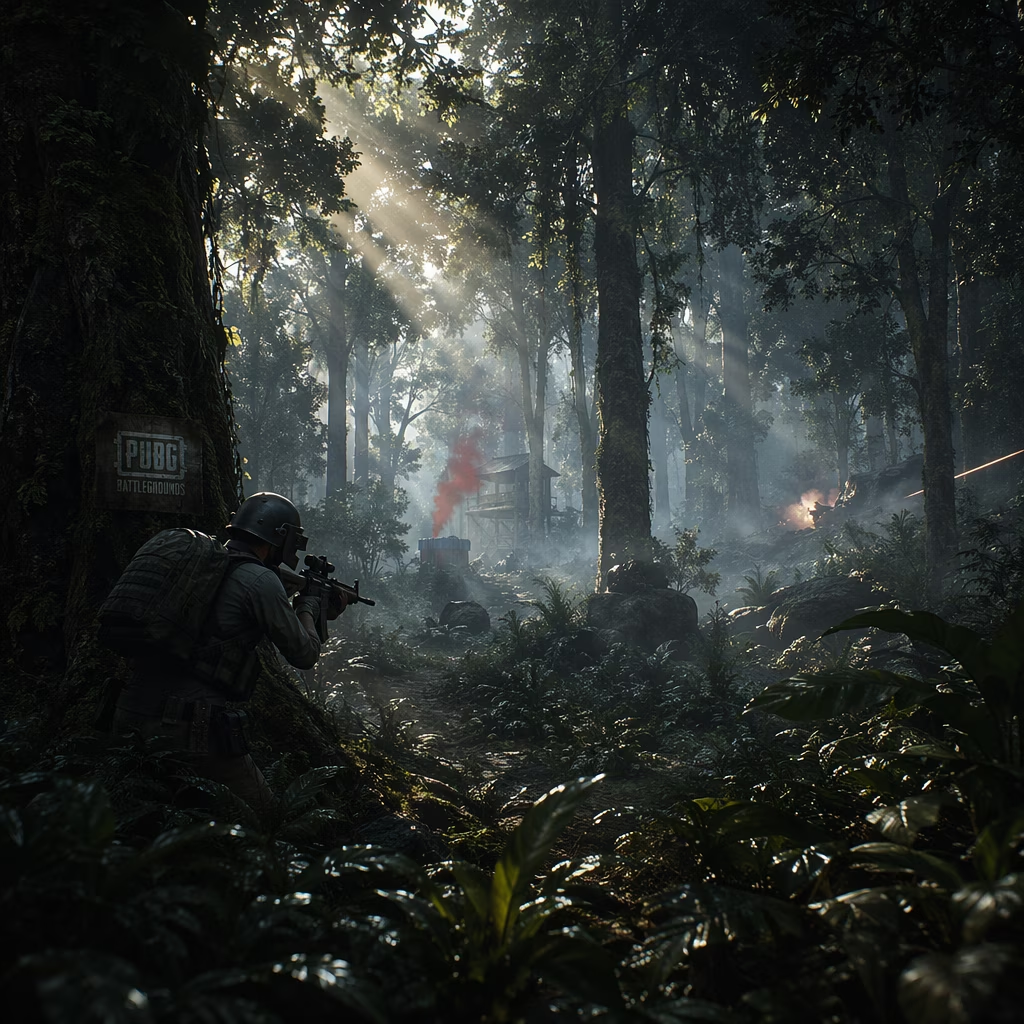
Let’s rewind to 2022. Striking Distance Studios, led by Dead Space veteran Glen Schofield, was pouring its own plasma into The Callisto Protocol. The premise was sublime: you’re stranded inside an isolated space prison where a body-horror contagion has twisted the inmates into grotesque, bone-crunching nightmares. Combat was deliberately oppressive—every swing of your stun baton felt like paddling through tar, and the developers aimed to drown you in vulnerability. At the same time, publisher Krafton was still milking the colossal teat of PUBG, the battle royale that turned a hundred strangers into each other’s final circles. Somewhere in the creative cauldron, someone decided these two IPs should belong to one shared fictional universe. The idea was that The Callisto Protocol would exist within the PUBG timeline, presumably centuries after everyone stopped caring about chicken dinners. But as Striking Distance’s chief technology officer Mark James confessed to PCGamesN at Gamescom 2022, that marriage hit a concrete wall.
“We looked at the two universes,” James said, “and there were a good 400 years in between both of them. It started to be so large—the connection would have taken away from the Callisto universe.” Imagine trying to thread a needle while riding a rocket: the sheer narrative gap forced the team to realize that stitching these worlds together would maul their own story. Every attempt to explain how a battle royale bloodsport from 2020s Earth led to a deep-space prison in the 25th century became an anchor dragging down the horror. It was like trying to build a cathedral on a foundation designed for a toolshed. So the developers approached Krafton and essentially said, “We need a divorce.” Krafton, to its credit, agreed—if breaking free was the right call for the game, then the shared universe would be scrapped.
Exactly how the link would have worked remains a crypt full of skeletal theories. Some speculated that the prisoners aboard Black Iron were former PUBG contestants, punished for their slaughter under some dystopian future law. Others imagined that those who refused to kill in the deathmatch were shipped off to the prison as an example. While these fan musings taste like forbidden lore candy, they never had the chance to solidify. Striking Distance chose instead to pour every drop of creativity into making The Callisto Protocol a standalone nightmare. And you can feel it in the final product—the game’s atmosphere is so thick you could carve it with a shiv.
Still, the ghost of PUBG never fully vacated the cell block. James confirmed that the game hides Easter eggs, little whispers of what might have been. “There are Easter eggs in the game, even Easter eggs from previous games,” he said. “It’s a nice little thing to add in, these little discoverable items. You’re going to discover audio logs from the previous prisoners, scrawlings on the walls, and the more you explore the more you’re going to learn about the origins of the prison.” Those scratched wall messages and desperate recordings act like faded constellations—they hint at a larger universe without ever naming it. In my playthrough, I found a log mentioning a “red zone” that felt suspiciously like a nod to PUBG’s artillery bombardments, but it was just ambiguous enough to slip past like a specter.
Fast-forward to 2026, and the franchise has only leaned harder into its own identity. The Callisto Protocol: Black Iron expanded the prison’s lore with flashbacks to an underground resistance movement that had zero ties to battle royale madness. Watching the series now, it’s clear that cutting the umbilical cord to PUBG was the best decision Striking Distance ever made. The horror is allowed to simmer in its own claustrophobic juices, and the narrative doesn’t have to perform backflips to justify a cosmetic crossover. Occasionally, I still smile at the what-ifs: maybe we’d have gotten a post-credits scene revealing a Winner Winner Chicken Dinner neon sign on a derelict cell wall. But that would have been like sticking a whoopee cushion under the Mona Lisa. Some things are better left unlinked.
What the whole episode teaches us is something profound about creative integrity. When two universes have a 400-year chasm between them—about the same distance separating us from the invention of the refracting telescope—forcing a connection can shrivel the narrative into a dried-up husk. Striking Distance chose to honor the fear, not the franchise synergy. And as a player who has now screamed through two full installments of Callisto nightmares, I’m grateful they did. So next time you’re looting a level-three helmet in Erangel, remember: somewhere, four centuries away, a shambling biomutant doesn’t give a damn about your blue zone tactics.
Comments