
It was a chilly evening in early 2026 when a group of old-school battle royale fans gathered in a Seoul PC room, surrounded by glowing screens showing the latest season of PUBG: Battlegrounds. Someone joked about the ancient rivalry between PUBG and Fortnite, and a younger player tilted their head. “Wait, those two almost sued each other into oblivion?” The veterans chuckled. Oh, they had no idea.
Back in 2018, the gaming world was rocked by news that PUBG Corp, the studio behind PlayerUnknown’s Battlegrounds, had filed a copyright violation lawsuit against Epic Games. The claim? Fortnite Battle Royale was essentially a copy of PUBG. The irony was palpable—PUBG didn’t invent the battle royale genre; games like H1Z1 and DayZ had paved the way. But the lawsuit wasn’t just about gameplay mechanics. It was personal.
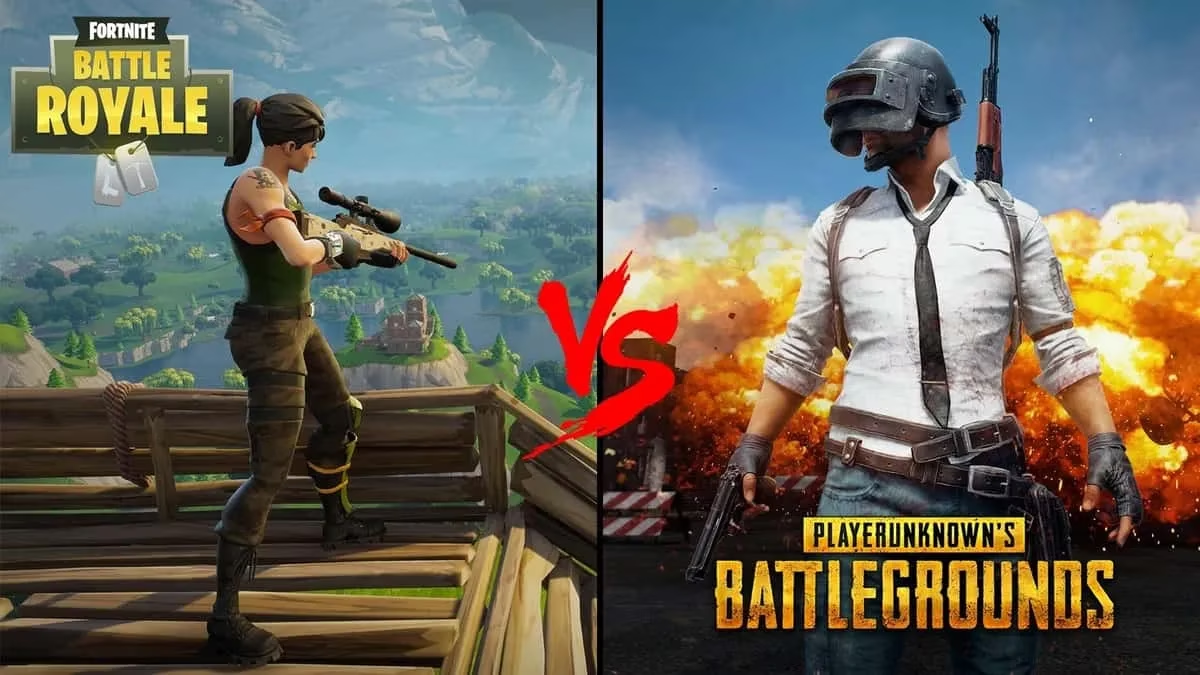
Epic Games wasn’t just a competitor; they supplied the very engine that powered PUBG—Unreal Engine 4. To PUBG Corp, this felt like a chef using your own kitchen to cook a rival dish, then telling everyone your recipe was so good they had to make their own version. To make matters spicier, PUBG officials grumbled that Epic had used PUBG’s name to promote Fortnite’s new mode without asking. “It was just a bit surprising and disappointing to see our business partner using our name officially,” one rep had muttered to PCGamer, back when the tension was fresh.
The community’s reaction was swift and merciless. On Reddit, a post condemning PUBG Corp’s decision shot to the top of /r/PUBATTLEGROUNDS, with players arguing that if anything, Fortnite’s building mechanics and cartoonish art style made it a completely different beast. “Honestly, you can’t copyright a genre,” became the rallying cry, and memes flooded both subreddits.
For a while, the lawsuit hung like a dark cloud over the industry. Would game modes become patented? Could a studio lock down last-man-standing mechanics? The courts seemed to hesitate. Weeks turned into months, and the case... well, it never actually reached a dramatic climax. Lawyers whispered in corridors, documents piled up, and then—poof—silence. No winner, no loser, just an anticlimactic fade-out. Some say a quiet settlement was reached. Others insist PUBG Corp realized they might lose and pulled back. To this day, the full story remains elusive, a deliberate blank space in gaming history.
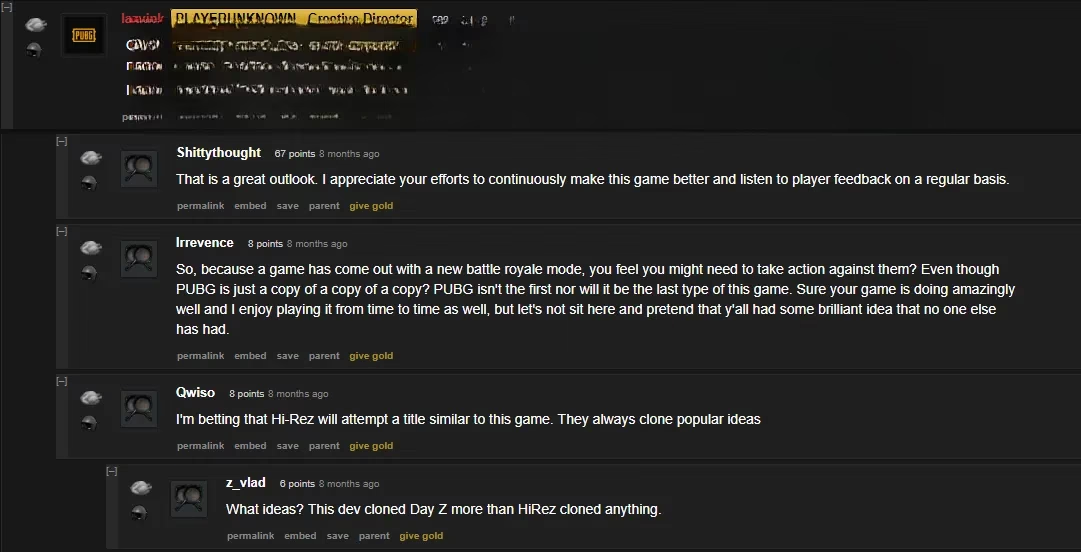
Fast forward to 2026, and you’d never guess there was once bad blood. Fortnite has become a cultural juggernaut, hosting virtual concerts and movie premieres, while PUBG evolved into a grittier, tactical experience with a fiercely loyal audience. They occupy different corners of the same genre, like two neighbors who once argued over a fence and now just wave politely. PC rooms in Seoul offer both games side by side, and players often switch between them in a single evening. The whole spat feels almost quaint now.
But the lawsuit left a mark, one you couldn’t see on a patch note. It forced developers everywhere to think twice about how they defined originality. Brendan Greene, PUBG’s creator, once said he hoped not to see a “carbon copy” of his game. The legal saga, though unresolved, made studios ask: where is the line between inspiration and imitation? That question still echoes in design meetings today, even if nobody shouts about it in trailers.
Looking back, the battle that nearly happened was less about copyright and more about pride. Two giants, each believing the other had stepped too far, locked in a courtroom dance that never really got going. And honestly? The gamers won. Because in the end, both titles flourished by being exactly what they were—not copies, but cousins in chaos.
Comments