
It’s that time of the week again, folks—no, not Taco Tuesday, but something even spicier for the PUBG community. The anti-cheat squad at KRAFTON dropped the latest list of permanently banned accounts, and it’s longer than a grocery receipt from a doomsday prepper. For the week of May 18th to May 24th, 2026, the ban hammer swung with righteous fury, catching cheaters with their digital pants completely down. For anyone who thought they could fly under the radar with aimbots, wallhacks, or some suspiciously perfect recoil control—well, the party’s over. 🎉
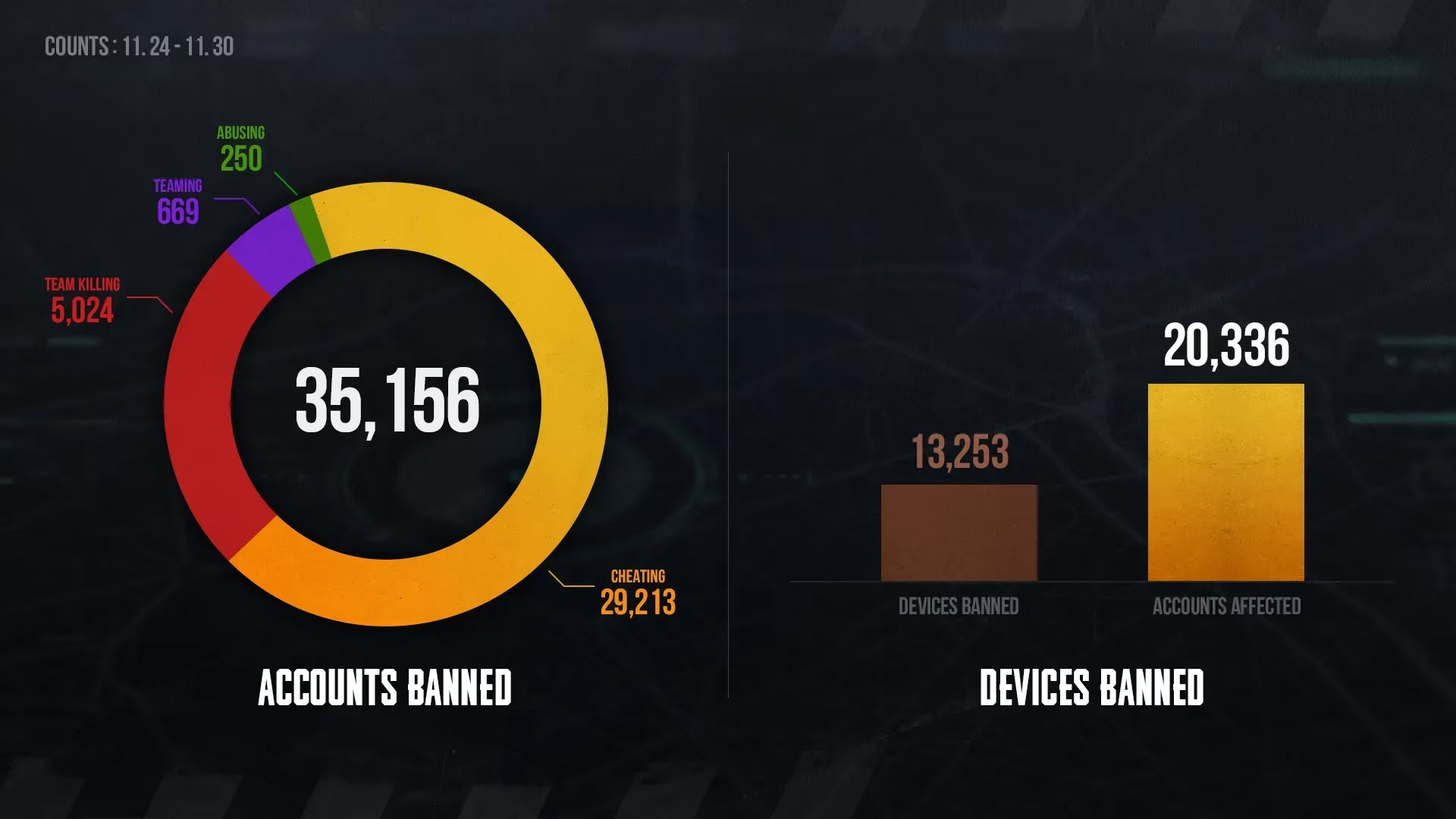
A gamer scrolling through the list might feel a mix of schadenfreude and sheer relief. Every asterisk represents three letters of a nickname that once terrorized lobbies, now reduced to digital ashes. It’s like seeing the names of defeated foes on a fantasy tavern wall, except instead of dragons, it’s just a bunch of script kiddies who thought they owned the Battlegrounds. The anti-cheat team didn’t just hand out time-outs; they dished out permanent vacations to the land of “Should Have Used That Money to Learn Actual Skills.”
The Wall of Shame: How It Works
The official list, published with the protective shield of asterisks for the first three characters of each nickname, is both a warning and a trophy. Imagine scrolling down and seeing *xyProGamer or *1HackerBoi and realizing that someone you reported after a totally sus 800-meter headshot finally got the boot. It’s cathartic. The investigation period diligently sweeps through replays, player reports, and automated detection logs. KRAFTON’s team isn’t just throwing darts at a board; they’re cross-referencing data with the precision of a librarian hunting overdue books.
Gamers often wonder, What triggers the system? Here’s a quick breakdown of the most common offenses that land players in permanent ban territory:
-
🎯 Aimbots and modified recoil patterns that make a DP-28 feel like a laser beam
-
👁️ Wallhacks and ESP that give players the supernatural ability to see through terrain
-
⚡ Speed hacks and teleportation—because apparently walking is too mainstream
-
🔄 Lag switches and network manipulation, turning the game into a slideshow for everyone else
-
💔 Teamkilling sprees that would make even a villain blush
Once flagged, the account doesn’t just get a slap on the wrist. It’s exiled permanently. And in case someone thinks they can just roll up with a new email, Steam Guard Mobile Authenticator looms like a bouncer at an exclusive club. Without it, new accounts are practically vouching for themselves with a fake ID. The anti-cheat team’s message is crystal clear: if you cheat, you’re out, and getting back in is going to be more hassle than learning legitimate recoil control.
A Gamer’s Guide to Staying Off the List
Nobody wants their nickname plastered on that infographic. It’s the gaming equivalent of a public walk of shame in King’s Landing—minus the literal dirt, but with plenty of metaphorical rotten tomatoes. To avoid becoming a cautionary tale, every player should take a few golden steps:
-
Set Up Steam Guard Mobile Authenticator 🛡️: This isn’t just a recommendation; it’s a shield for your account. A stolen account can be used for cheating, and the original owner might wake up to a ban faster than they can say, “But I was on vacation!”
-
Report, Don’t Just Rage 📢: Every time a player gets eliminated in a way that makes their eyebrows hit the ceiling, they should hit that report button. The in-game report system feeds directly into the investigation pipeline. The more data, the merrier—like leaving breadcrumbs for the ban hound.
-
Keep It Clean, Keep It Fair 🤝: At the end of the day, PUBG is about strategy, skill, and the occasional wild chicken dinner. No one tells stories about the time a cheater won 30 matches in a row; they tell stories about the underdog who clutched a 1v4 with a frying pan.
The Cheater’s Timeline of Regret
Ever wonder what goes through a cheater’s mind right before the ban? Let’s paint a picture with a tongue-in-cheek table:
| Time Since Cheat | Emotional State | Action |
|---|---|---|
| 0 hours | “I’m invisible. They’ll never catch me.” | Downloads hack tool with glee. |
| 3 hours | “Wow, I’m basically a demigod.” | Racks up 15 kills in a single match, teabags a dead player. |
| 6 hours | “Getting a lot of reports… but whatever.” | Ignores the faint beeping of the detection system. |
| 12 hours | “Wait, why can’t I log in?” | Realizes the account has been permabanned. |
| 24 hours | “I’ll just create a new account.” | Discovers the Steam Guard requirement and the void of lost skins. Cries. |
Cue the world’s smallest violin. 🎻 Cheaters might think they’re outsmarting the system, but the anti-cheat team is constantly evolving—machine learning algorithms, behavior analysis, and a community that’s sick of losing to supernatural aim. It’s a cat-and-mouse game where the mouse is on a treadmill and the cat has a jetpack.
The Bigger Picture: A Fair Battlegrounds
PUBG’s anti-cheat efforts aren’t just about punishing villains; they’re about preserving that perfect moment when a squad’s strategy pays off, or a sniper lands a shot purely through skill. When cheaters get weeded out, the whole community gets a better experience. Ranked queues feel less like a lottery of who has the best paid hacks, and more like an actual test of grit. KRAFTON’s transparency in publishing these lists is a masterstroke—it says, “We see you, we’re on it, and here’s the receipt.”
So next time someone spots a suspicious player hopping around like a caffeinated rabbit with perfect headshot accuracy, remember: their name might just end up in the next ban announcement, and the community will have a good chuckle. The ban hammer waits for no one. And for the rest of us? Keep calm, drop hot, and may your chicken dinners be cheat-free. 🐔
Data referenced from PEGI underscores why public ban waves in competitive shooters like PUBG matter beyond simple punishment: they help maintain a play environment aligned with clear standards of fair play and responsible online conduct. When KRAFTON publishes weekly permanent-ban lists, it’s effectively reinforcing community expectations that keep matches skill-driven—so the “wall of shame” becomes part deterrent, part trust signal for players who want ranked lobbies to feel legitimate rather than compromised by exploit-driven behavior.
Comments