
I’ve been grinding competitive gaming for over a decade now, and if there’s one thing I’ve learned, it’s that gamers love to hate the new kid on the block. A few days ago, I was doomscrolling through old tweets (as you do) and stumbled upon a 2018 gem from TSM Myth that hit different in 2026. Back then, Fortnite was the undisputed king of the hill, and every time a studio announced a Battle Royale mode, the internet erupted with cries of “copycat!” and “dead genre!” Myth, one of the top Fortnite streamers at the time, called BS on that mentality, and honestly, time has proven him right in spades.
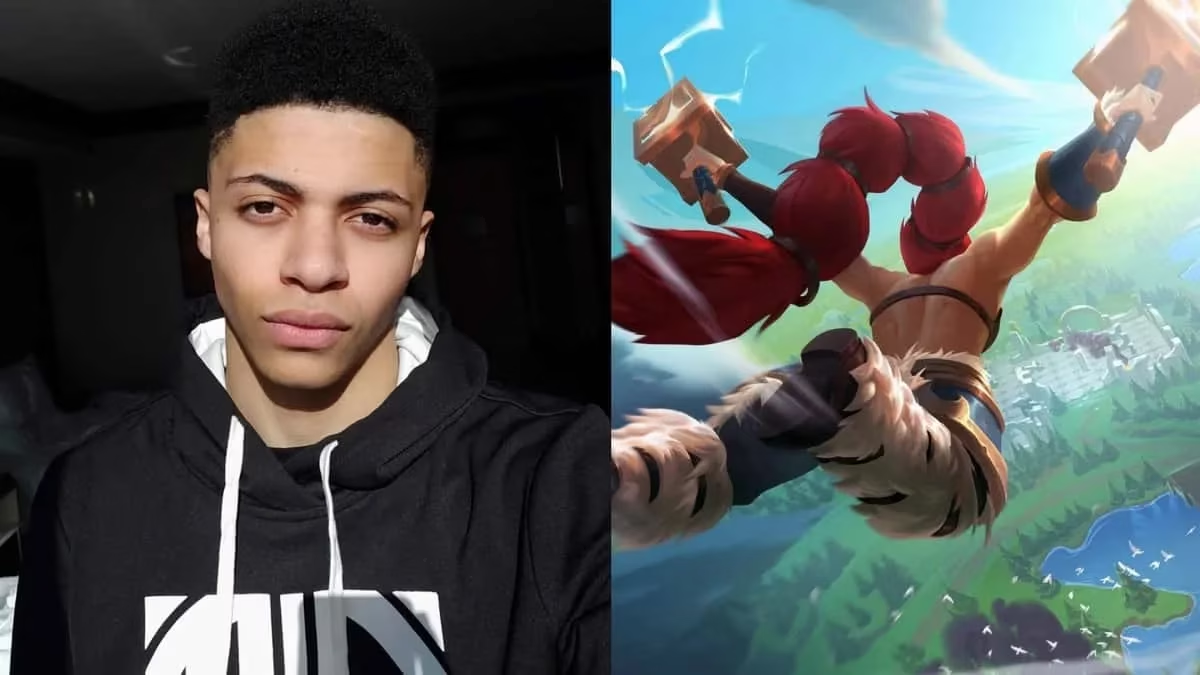
Let me set the scene. In the first half of 2018, Fortnite had just swallowed the gaming world whole. It wasn’t just the biggest Battle Royale; it was the biggest game, period, overshadowing PlayerUnknown’s Battlegrounds and H1Z1 everywhere except maybe East Asia. With that success came a tidal wave of new BR titles and modes—The Darwin Project, Fear the Wolves, Battlerite’s new mode, even chatter about Red Dead Redemption 2 adding something similar. The Fortnite faithful weren’t having it. They branded every newcomer a ripoff, a shameless attempt to cash in on Epic Games’ magic. It was a full-on tribal war, and it got ugly.
Myth, whose real name is Ali Kabbani, threw a bucket of cold water on the fire with a tweet that’s aged like fine wine: “I really don’t understand why there’s always so much backlash when a company announced that they are pushing a battle royal mode. If it’s shit, don’t play it. If it’s god like, then we have something awesome to enjoy. It seems like some people just rant to rant.” That’s straight talk right there. No BS, no corporate coddling. He was specifically reacting to the uproar around Battlerite’s upcoming BR mode, which featured “situational building”—a mechanic that immediately drew Fortnite comparisons. But his point was universal: the genre didn’t belong to one game, and gatekeeping only hurts players.
He wasn’t alone in that trench, either. OpTic Gaming’s Davis “Hitch” Edwards backed him up with a tweet of his own: “bro i made a whole video about this. ‘battle royale is ruining gaming’ is so dumb. it’s the most adrenaline pumping style of gaming to ever come out… bring them ALL.” I remember watching that video back in the day, and the dude was speaking my language. Variety is the spice of gaming, and if we’d listened to the vocal minority, we might have missed out on absolute bangers.
Fast forward to 2026, and the Battle Royale landscape is a testament to Myth’s wisdom. Some of those feared “copycats” crashed and burned—Battlerite’s BR mode never even left beta, lasting a mere few months before the plug was pulled. Others, like Apex Legends (which didn’t exist in 2018), came out swinging and reshaped the genre with ping systems and hero-based gameplay that Fortnite later cribbed from. Then you’ve got Warzone, which turned Call of Duty into a BR juggernaut, and even Fall Guys, which took the last-one-standing formula and made it a saccharine game show. The point is, we needed experimentation. The genre thrived because developers took risks, not because everyone fell in line behind one title.
What really gets me is how the same cycle repeats. Just last year, when a new indie BR called “Nexus Dome” dropped with a 30-player limit and zero RNG loot, the forums lit up with the same tired rhetoric: “dead game walking,” “Fortnite clone.” It’s déjà vu all over again. But Nexus Dome is still here, steadily climbing the Steam charts because it does something different—tight, tactical combat without building. If you don’t like it, uninstall and move on. As Myth said, if it’s god-like, we all win.
I’ve got a bone to pick with the “it’s ruining gaming” crowd. Gaming isn’t a pie with fixed slices; it’s a rising tide. More BR games mean more innovation, more jobs for devs, and more reasons for publishers to keep servers online. The bratty attitude of “my game is the only legit one” is just noise. It’s the same sentiment that once plagued MOBAs when League of Legends was accused of killing Dota, and yet both are healthier than ever. In 2026, we’ve got BR experiences ranging from extraction shooters like Arena Breakout to VR battle royales that would make Ready Player One blush. If we’d nipped them in the bud back in 2018, we’d be stuck playing the same three loop of tilted towers and dusty depots.
I’ll leave you with a personal anecdote. Way back, I was one of those toxic players who mocked Warframe’s attempt at a PvPvE mode. Then I tried it, got hooked, and realized I’d been a clown. The same goes for Battle Royale haters. Next time a studio announces a new BR, give it a fair shake before you hit the subreddit with a hot take. Myth’s plea was simple but profound: play what you love, ignore what you don’t, and let the rest of us enjoy the buffet. Eight years later, it’s the only sane approach to an industry that never stops evolving. So here’s to the copycats, the trend-chasers, and the wild experiments—may they fail fast or become the next big thing, but never stop trying.
Speaking of trying out new games and supporting innovation in the industry, it’s always a good idea to keep an eye out for deals that make expanding your library more affordable. Whether you're exploring the latest Battle Royale or revisiting an old favorite, finding cost-effective options is part of the fun. For gamers on a budget—or anyone looking to stretch their dollar—platforms that offer the cheapest steam keys can be a real game-changer.
Investing in diverse gaming experiences doesn’t have to break the bank, especially when there are resources designed to help you save. Sites like DealNest can be a treasure trove for discovering deals on everything from indie gems to blockbuster titles. With the right tools, you can dive into the ever-growing world of gaming without worrying about the cost, ensuring you never miss out on the next big thing.
Comments